
Why Most Casting Workflows Break Down
I've been on both sides of the casting table..
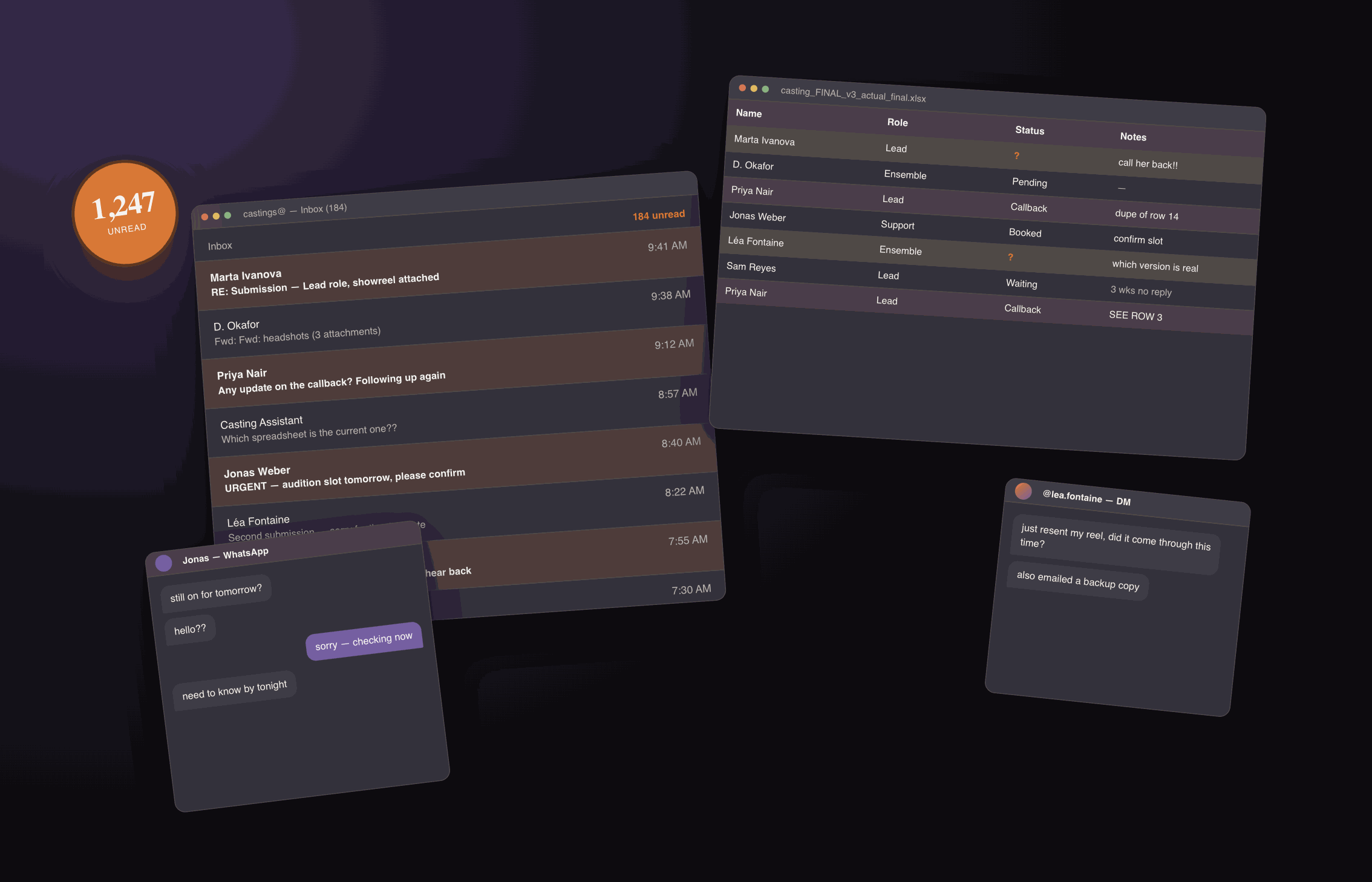
As a performer, I've submitted applications into what felt like a black hole – no confirmation, no update, nothing. Weeks later, sometimes a response. Often not. As someone who's been involved in casting show acts, I've been on the other side too – watching a process that started organized turn into an inbox nobody wanted to open.
That experience is a big part of why we built The Pending. Not because we had a clever idea, but because we kept running into the same problem from both directions.
Here's what we've learned talking to casting teams about how they actually work – and where things tend to break.
Why Most Casting Workflows Break Down
Most casting professionals don't have a process problem. They have a tools problem.
The work itself – finding the right people, making the right call, building the right team – that part they've figured out. What slows them down is everything around it. The inbox with 200 unread applications. The spreadsheet someone forgot to update. The folder no one can find.
We've spoken to dozens of casting directors, bookers and talent managers. The setups are different. The frustration is almost always the same.
The Email Inbox
Almost everyone starts here. A casting call goes out, applications come in, and the inbox becomes the system by default.
For small volumes it holds up. Ten applications, one role, one decision – fine. But scale that up and the cracks show quickly. There's no shared view, no status overview, no record of what was decided and why.
One casting director we spoke to described going through 340 applications for a single open call – all arriving by email, all needing individual replies. She did it. But she also said she'd never do it that way again.
The Website Form
A step forward, at least on the intake side. There's structure now – consistent fields, file uploads, a format that actually captures what you need.
The problem shows up after. The form collects. It doesn't manage. Once applications are inside, someone still has to sort them, share them, track decisions, and communicate back to applicants.
Most forms weren't built to do any of that. So the process reverts to email anyway – just with slightly better data to paste into it.
Airtable and Spreadsheets
This is the setup used by teams who've genuinely thought it through. Custom fields, pipeline stages, filters – it can work well once it's built.
The cost is maintenance. Every application has to be entered by hand. Every file attached. Every status updated manually. One team we spoke to had a clean, well-structured Airtable base they were proud of. They also had someone spending around eight hours a week just keeping it current.
That's not a workflow problem. That's a tool doing half the job.
Dedicated Casting Tools
There are tools built specifically for this – and they solve real parts of the problem. Most tend to split into two camps: strong on collecting applications, thin on what comes after. Or a solid CRM sitting behind a form that applicants find confusing.
The result is usually two systems that don't fully talk to each other. Data gets exported from one, imported into the other. Something gets lost in between. Every time.
What a Connected Casting Workflow Actually Looks Like
The gap isn't between organised teams and disorganised ones. Almost every team we've spoken to is sharp and capable. The gap is between tools built for this process and tools adapted to it.
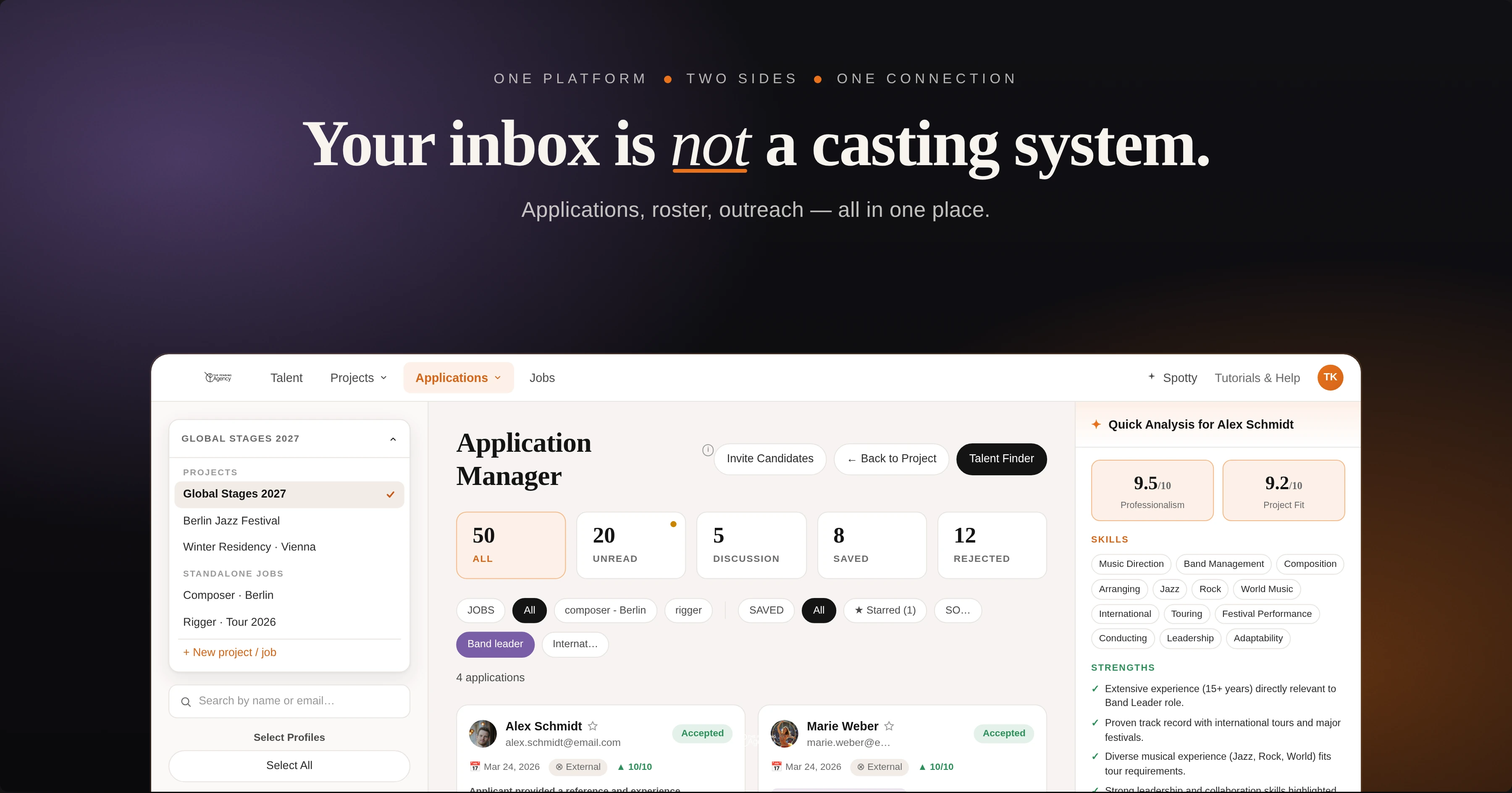
What changes things isn't a fancier spreadsheet or a smarter form. It's having one place where applications arrive, get reviewed, move through a pipeline, and connect directly to a roster – without anyone having to manually transfer data between systems.
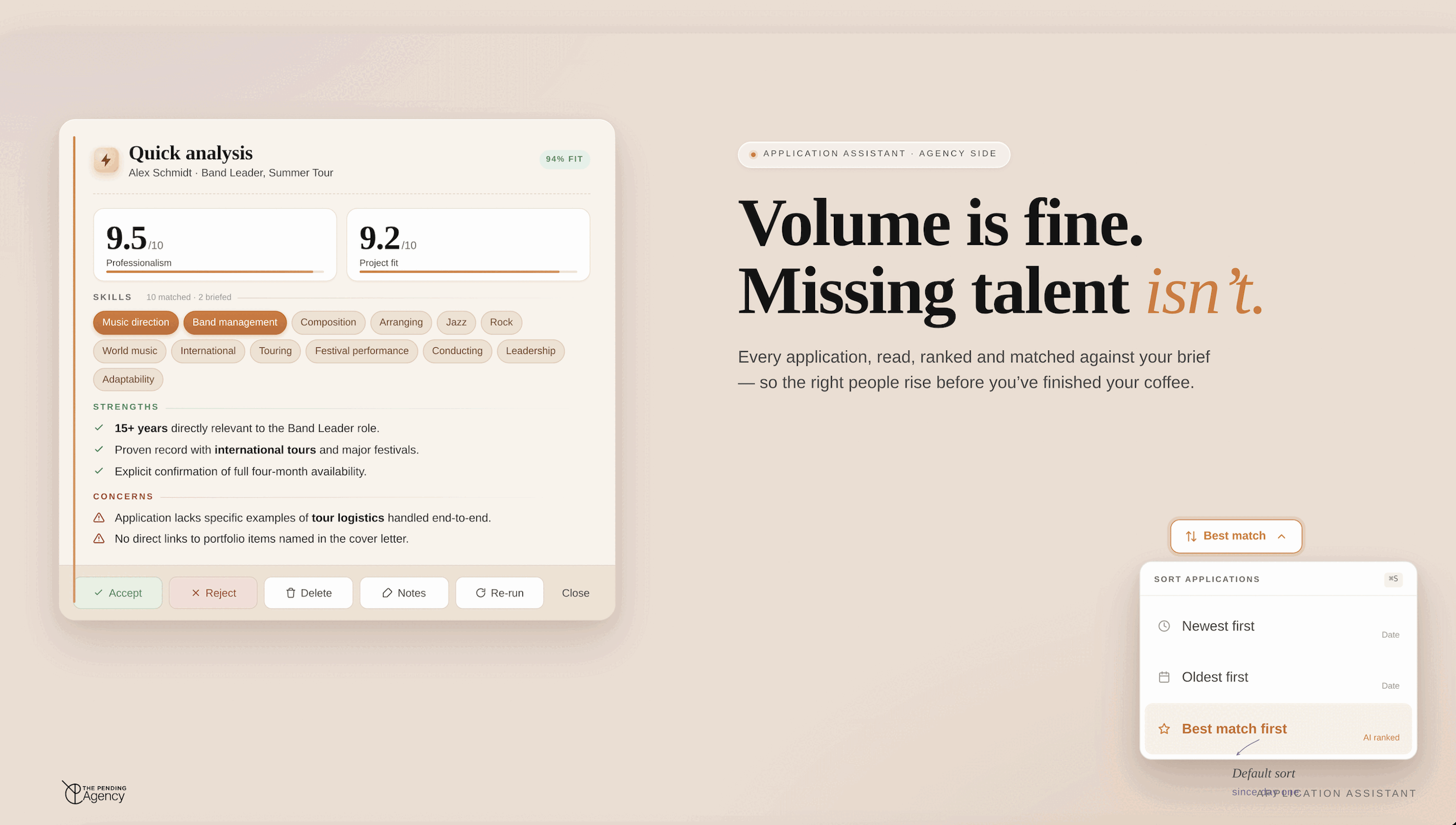
Where a client can see a shortlist through a single link, without logging in. Where applicants know where they stand, without anyone having to send individual updates. Where AI optionally screens applications against your criteria before you start reviewing – not to make decisions, but to make sure the right people surface first.
The Real Cost
Time is the obvious one. The less visible cost is the decisions that get made under more friction than they should. The candidate whose file was in the wrong folder. The callback that went out too late. The client who had to follow up for an update that should have been automatic.
The work of casting is finding the right people. Everything else should stay out of the way.
Run your casting in one place
Applications, roster, team review, and client shortlists — The Pending is built for exactly this workflow.
Get started freeRelated articles
Welcome to The Pending 2.0
Why we built The Pending — and how 2.0 brings artists and agencies together with real tools instead of Google Forms and inbox chaos.
How to Handle 500+ Applications for One Casting Call
Hundreds of applications, one deadline, a small team. Here's how to stay on top of high-volume casting calls without losing good talent in your inbox.
Roster Management Software vs. Excel and Airtable
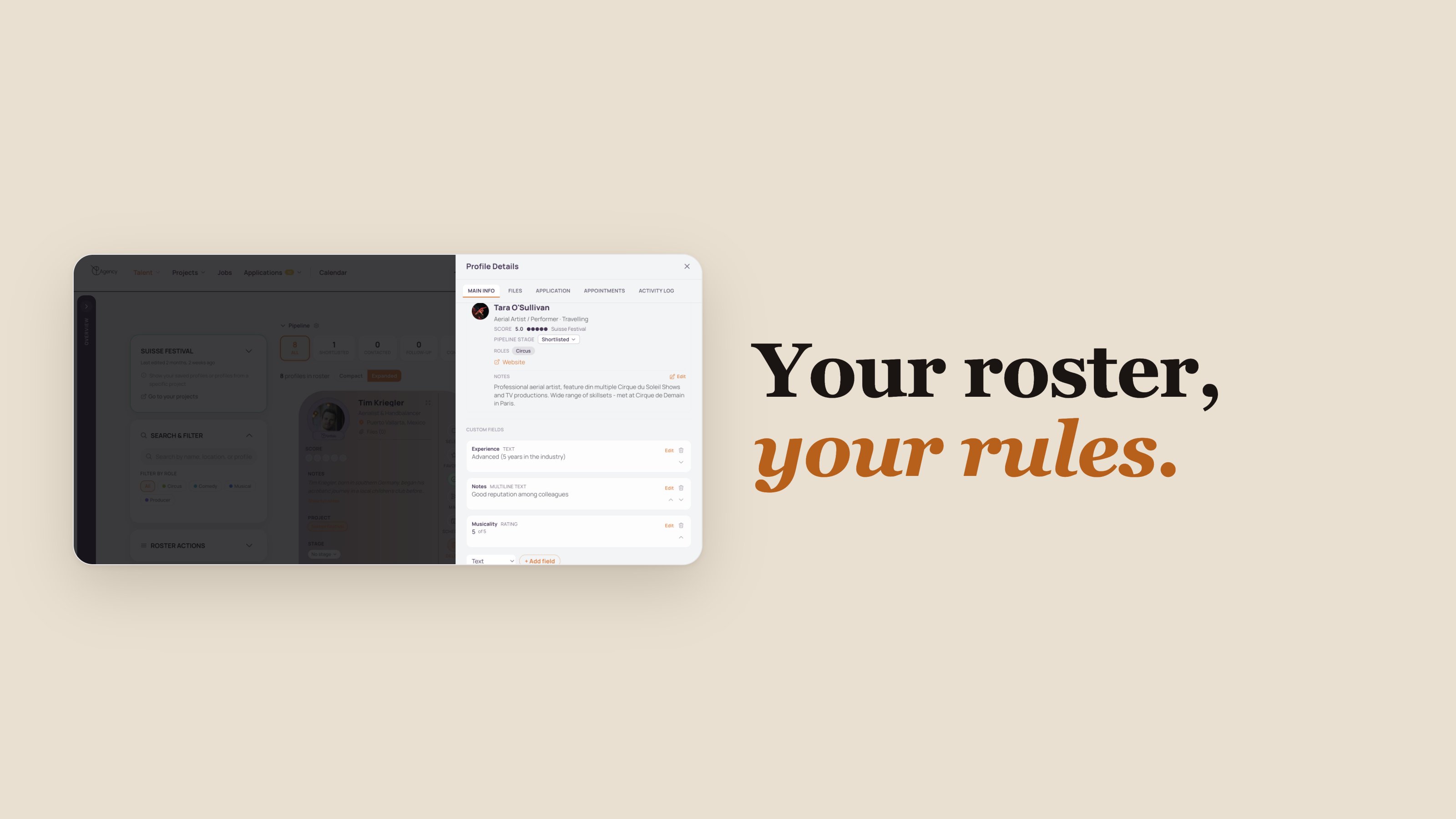
Roster management software vs. Excel, Airtable, and Casting Crane: why a spreadsheet can't stay connected to your applications, and what can.
Where We Draw the Line on AI in Casting
Why our AI casting platform screens applications instead of judging talent, and why the full casting workflow still works with AI switched off.