
How to Handle 500+ Applications for One Casting Call
You post a casting call on Monday. By Wednesday, there are 300 applications in your inbox. By Friday, 500. Some are perfect, many don't fit the brief at all, and somewhere in between are the three people you'll actually end up casting.
The problem isn't finding talent. It's managing casting applications at this volume without missing the right people.
Here's how to structure a high-volume casting workflow so it stays manageable from the first application to the final booking.
1. Write a casting call that filters for you
The easiest application to review is the one you never receive. The more precise your casting call, the fewer irrelevant applications you get.
Be specific about the essentials: role, dates, location, skills, and whether it's paid. And instead of asking people to "send materials by email", use a structured application form. When everyone submits the same information in the same format, you can compare applicants in seconds instead of opening attachments one by one.
On The Pending, you can build custom application forms for each listing, including yes/no questions, required files and any role-specific details you need.
2. Pre-sort casting applications automatically
Reading 500 applications from top to bottom takes days. Most of that time goes into ruling people out, not finding the right ones.
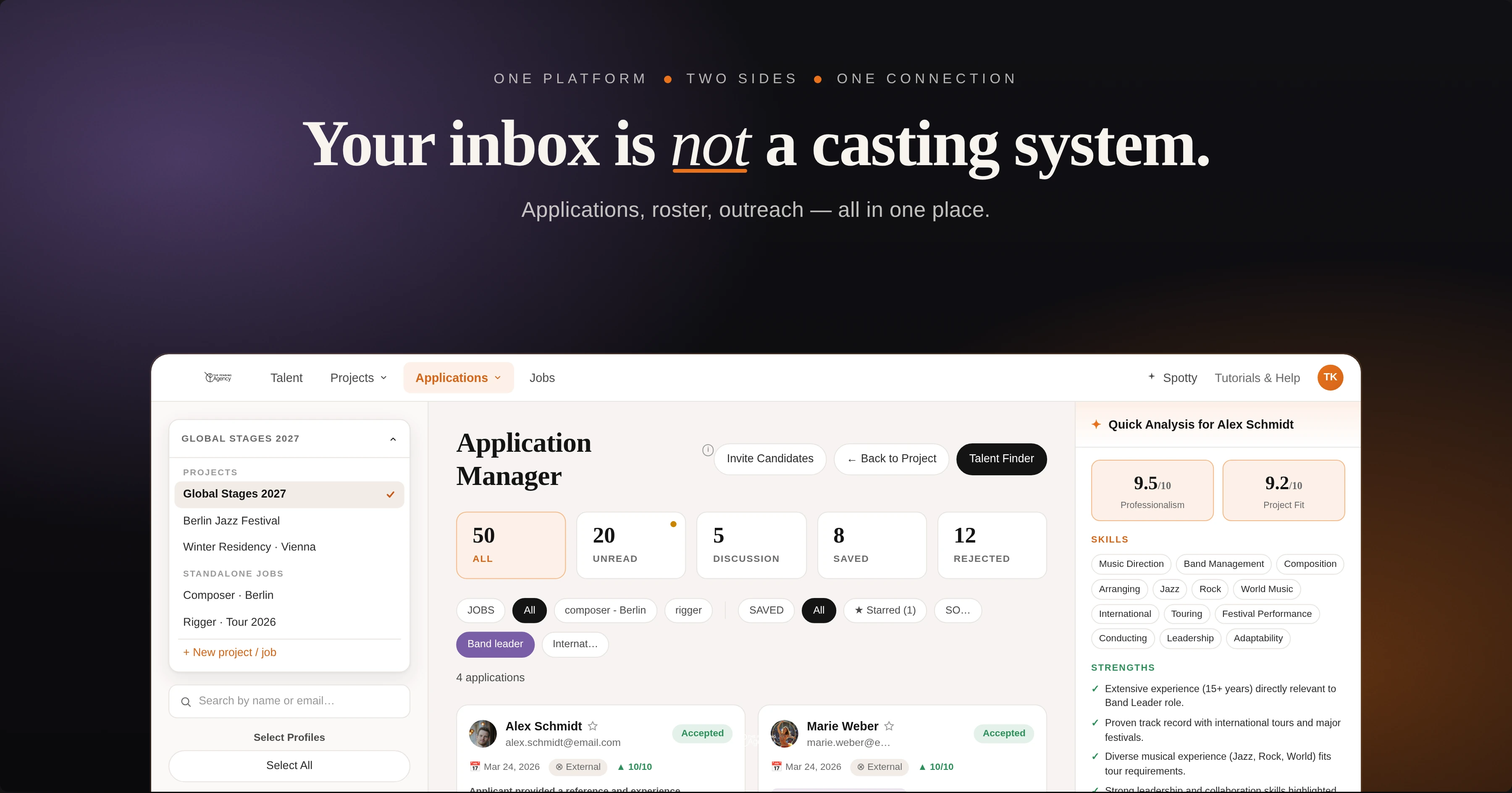
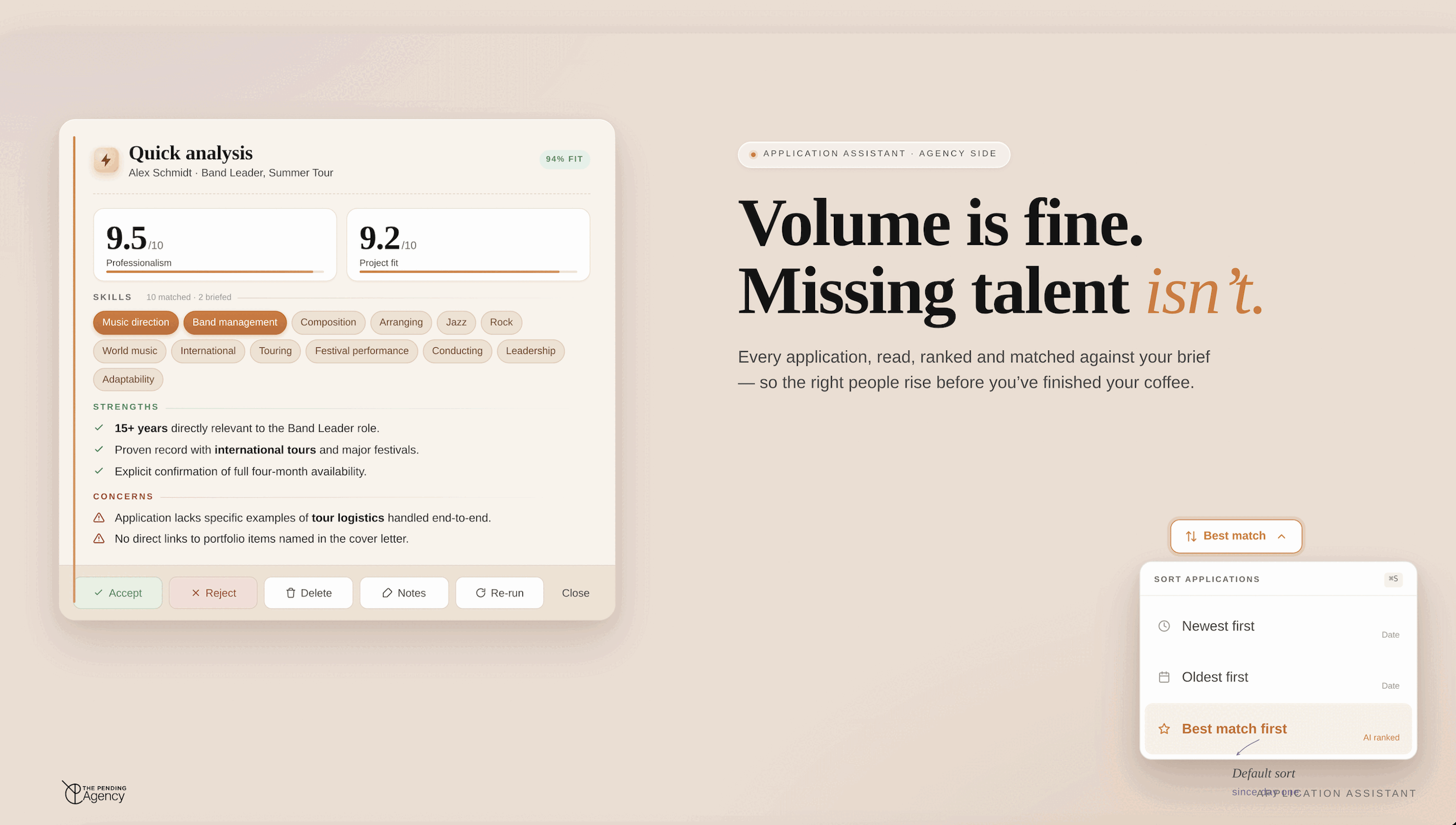
Smart pre-sorting flips that. Applications are sorted against your project criteria as they come in, so the strongest matches are at the top when you open the list. Each applicant also gets a short summary, so you get a first impression without opening every profile.
You still make every decision. The pre-sorting just decides where you start looking.
3. Use bulk actions for clear-cut decisions
A large part of every high-volume casting call is clear-cut: applicants outside the location, missing required materials, not available on the dates. There's no need to handle those one by one.
Filter by status or criteria, select the group and send a template message to everyone at once. Applicants get a clear answer, and your list shrinks to the people who are actually in the running.
4. Score applicants as a team
Once you're down to a shortlist, other people usually need to weigh in: a director, a choreographer, a client. That's where most casting workflows fall apart, with opinions scattered across emails, chats and spreadsheets.
Instead, give everyone access to the same list and let them score applicants directly. You see the combined scores in one place and can filter for the highest-rated talent. No more collecting feedback from five different channels.
5. Track callbacks and next steps in one place
Between the first review and the final booking, there are usually several rounds: callbacks, internal reviews, client approvals. With hundreds of applicants, it's easy to lose track of who is at which stage.
Assign each shortlisted applicant a clear stage, such as "Callback 1" or "Ready to approve", and filter by it. At any point, you see exactly who is where, without a separate spreadsheet.
6. Build a talent database from every casting call
Here's what often happens after a big casting call: you book three people, and the other 497 applications stay in an inbox you'll never open again. Including the 20 who were great, just not right for this role.
Move the strongest applicants into your own talent database, with all their materials and application context attached. The next time you're casting, you start with a pool of people you've already vetted instead of posting from scratch.
FAQ
How long does it take to review 500 casting applications?
Reviewing every application manually can take several days. With structured forms, pre-sorting and bulk actions, most teams can narrow 500 applications down to a shortlist in a fraction of that time.
Can I manage casting applications without email?
Yes. With dedicated casting software, applications come in through a form and land in one list, where you can sort, filter, score and reply without switching to your inbox.
Does AI decide which applicants get cast?
No. On The Pending, smart pre-sorting only suggests an order based on your criteria. Every decision stays with you and your team. AI analysis and pre-sorting are completely optional.
Manage your next casting call with The Pending
High-volume casting doesn't have to mean late nights in your inbox. With a clear structure, most of the work becomes sorting and deciding, not searching.
The Pending brings it all together: listings, application forms, smart pre-sorting, team scoring and your talent database, connected in one place. Start for free at agency.thepending.com, or book a short call and we'll show you how it works for your next casting call.
Run your casting in one place
Applications, roster, team review, and client shortlists — The Pending is built for exactly this workflow.
Get started freeRelated articles
Where We Draw the Line on AI in Casting
Why our AI casting platform screens applications instead of judging talent, and why the full casting workflow still works with AI switched off.

Roster Management Software vs. Excel and Airtable
Roster management software vs. Excel, Airtable, and Casting Crane: why a spreadsheet can't stay connected to your applications, and what can.
Why Most Casting Workflows Break Down
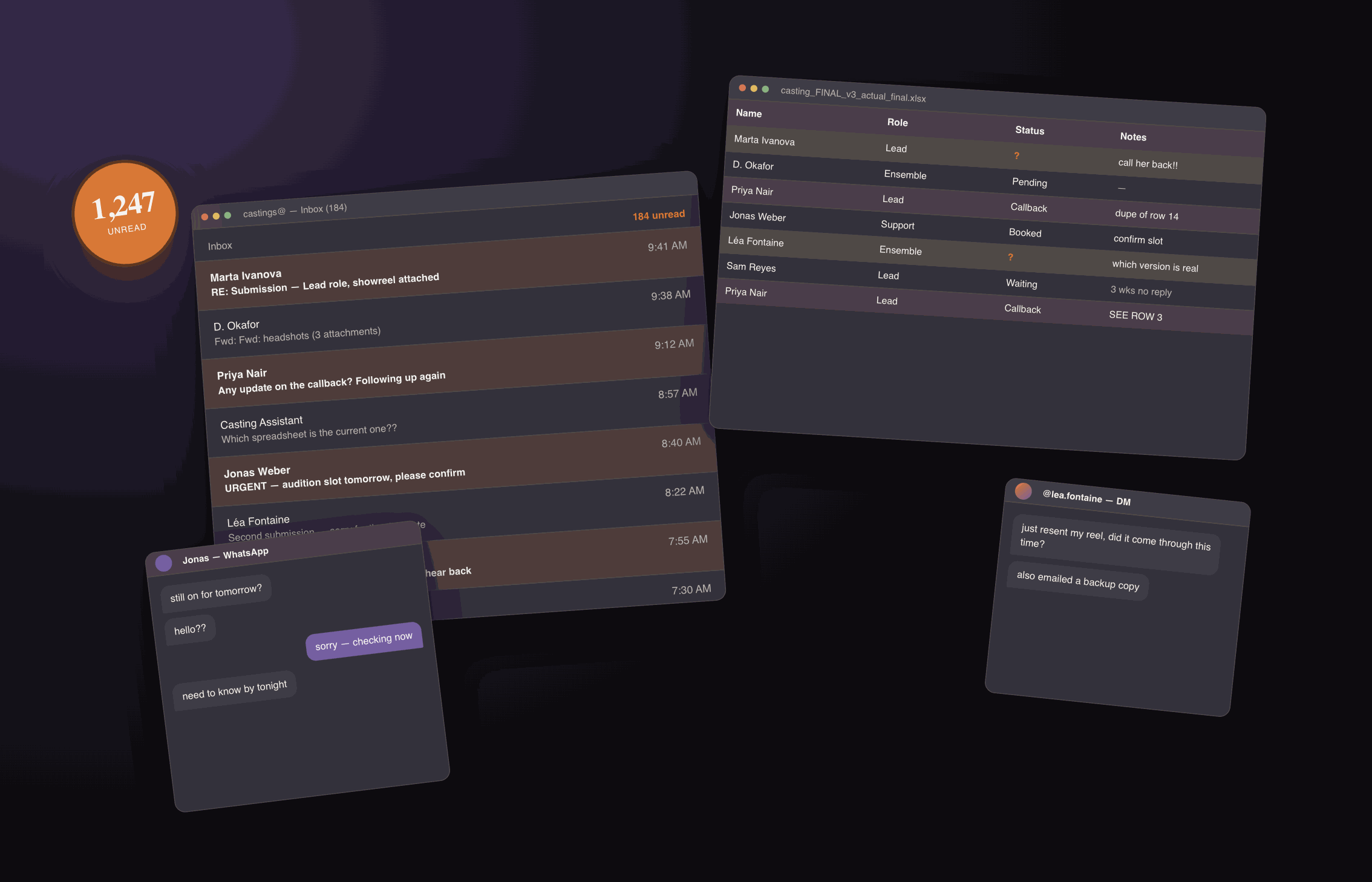
Google Forms, scattered inboxes, no way to track who applied. Here's why most casting workflows break down — and what actually fixes it.
Welcome to The Pending 2.0
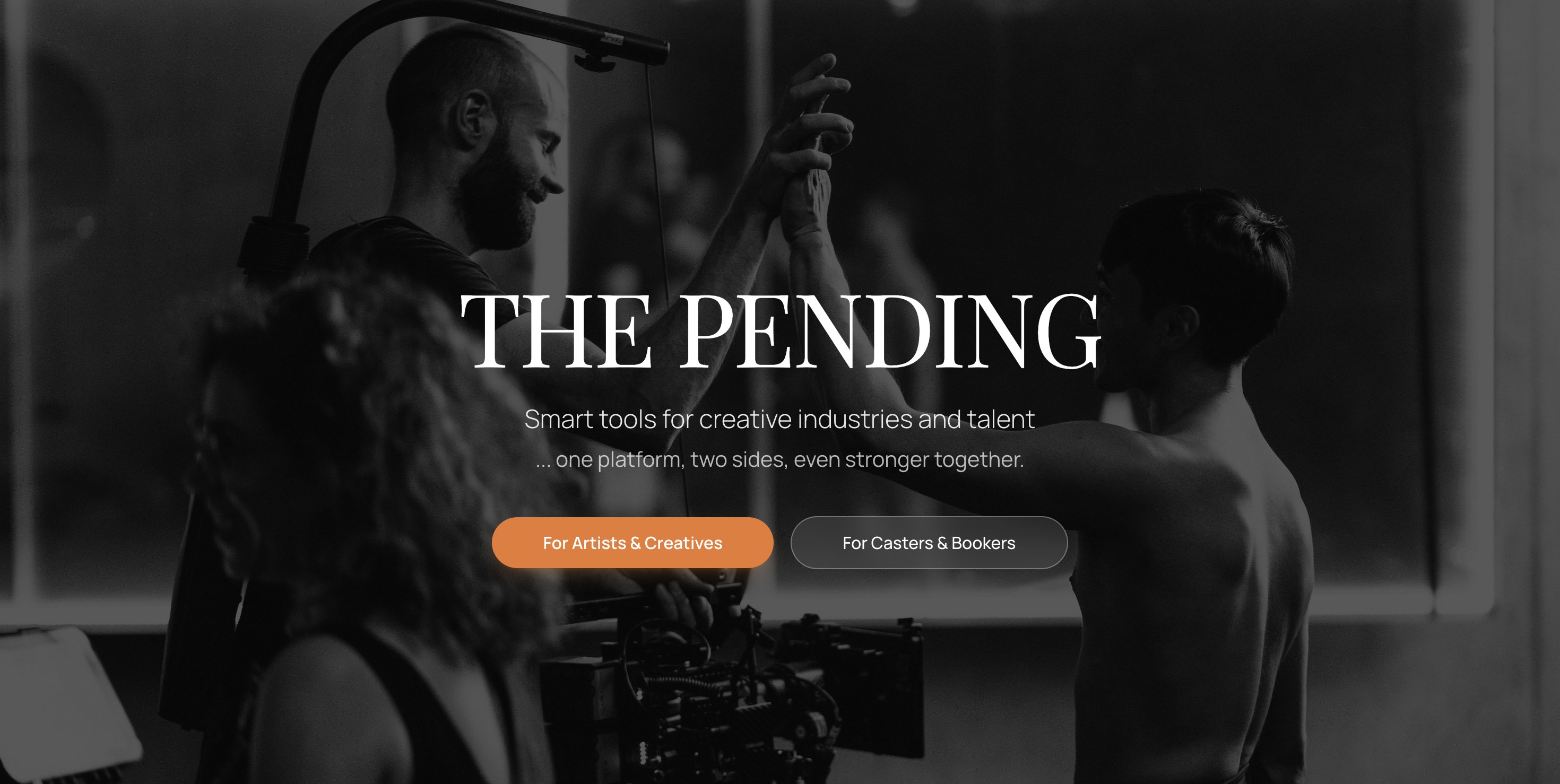
Why we built The Pending — and how 2.0 brings artists and agencies together with real tools instead of Google Forms and inbox chaos.